 ×
×

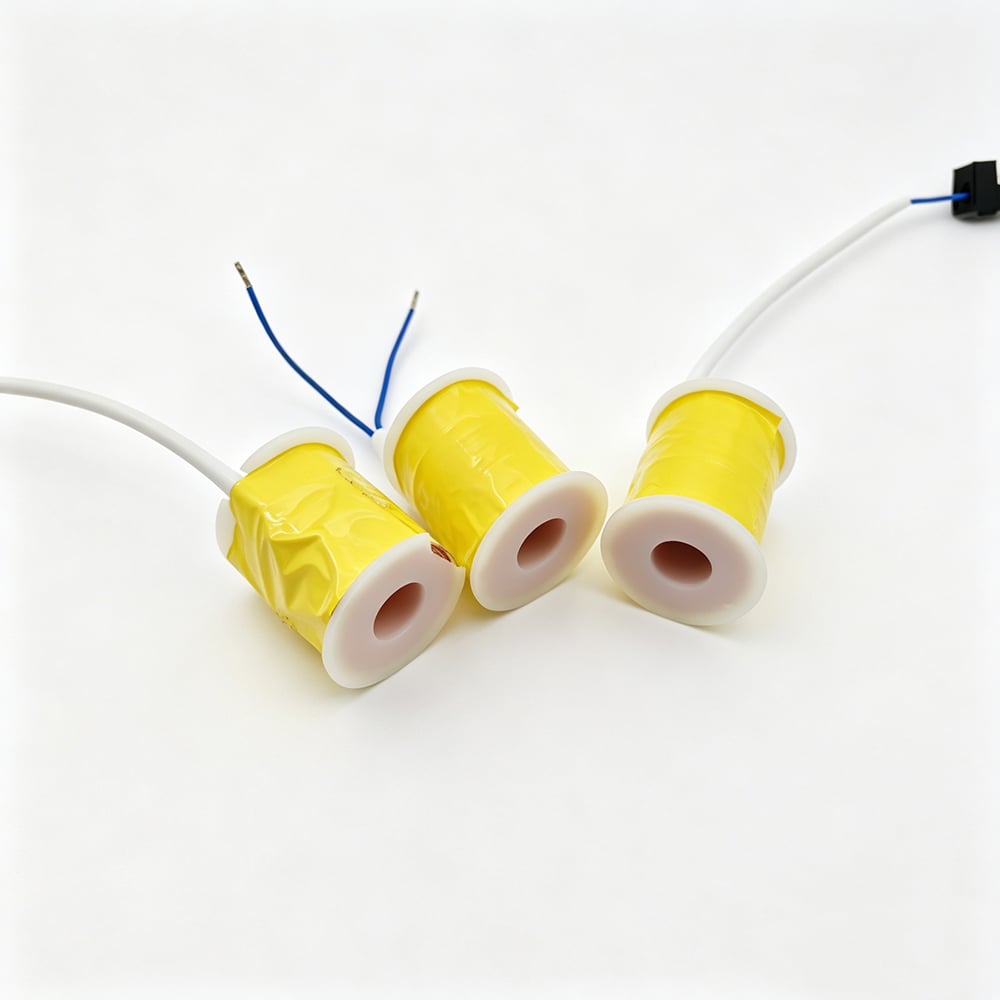
Induction coils have long been recognized as essential components in heating systems, but their versatility extends far beyond conventional thermal applications. Modern industries are discovering innovative ways to deploy induction coils across diverse sectors, from telecommunications to healthcare, renewable energy, and consumer electronics. Understanding these broader applications of induction coils enables engineers, procurement specialists, and product developers to unlock new efficiency gains and cost savings in their operations. This article explores the transformative role induction coils play across multiple industrial domains, revealing opportunities that many organizations have yet to fully leverage.
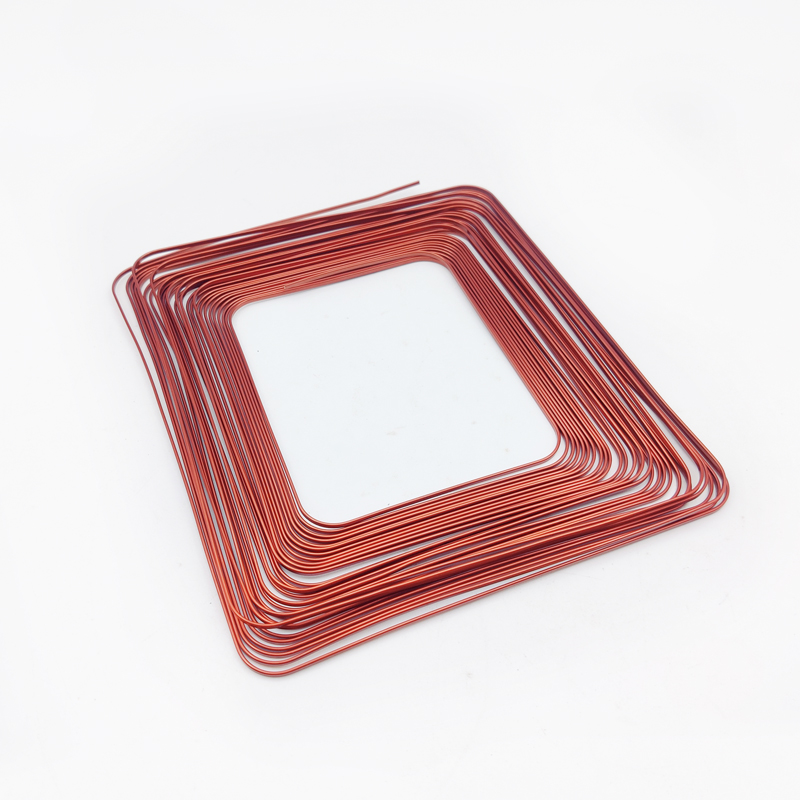
The electromagnetic principles governing induction coils make them ideal for applications that require efficient energy transfer, signal processing, or electromagnetic coupling without physical contact. Whether used in power distribution networks or advanced medical diagnostic equipment, induction coils continue to prove their adaptability and reliability. Organizations investing in high-quality induction coils designed for specific industrial contexts gain competitive advantages through improved performance and reduced maintenance costs. By examining real-world use cases and technical capabilities, businesses can identify which induction coil solutions best serve their operational requirements.
Induction coils serve as critical components in electrical transformers, where they facilitate voltage conversion and power distribution across national grids and industrial facilities. The primary and secondary windings of induction coils enable safe, efficient stepping up or stepping down of electrical voltage levels, ensuring that power reaches end-users at the correct specifications. Modern substations rely extensively on induction coils to manage load balancing, reduce transmission losses, and protect circuits from electrical faults. Utilities deploying advanced induction coil designs report significant improvements in grid stability and reduced energy waste across distribution networks.
Industrial facilities increasingly employ induction coils within power conditioning systems to filter electromagnetic interference and mitigate harmonic distortion. When variable-frequency drives, switching power supplies, and nonlinear loads operate in manufacturing environments, induction coils work in tandem with capacitors and resistors to maintain clean, stable power. This application of induction coils protects sensitive equipment, extends machinery lifespan, and ensures compliance with power quality standards. Facilities implementing induction coil-based filtering solutions experience fewer equipment failures and reduced downtime.
Wireless charging systems for consumer electronics, electric vehicles, and industrial equipment fundamentally depend on coupled induction coils operating at specific resonant frequencies. The transmitter induction coils generate time-varying magnetic fields that induce voltage in receiver induction coils, enabling contactless energy transfer without conductive pathways. Modern induction coils engineered for wireless power applications maintain high coupling efficiency across varying air gaps, a critical requirement for practical deployment. Companies developing wireless charging solutions invest heavily in optimizing induction coil design to achieve faster charging speeds and greater transmission distances.
Medical devices such as cardiac pacemakers, neurostimulators, and cochlear implants rely on transcutaneous induction coils to receive power wirelessly from external charging units without requiring surgical replacement. Miniaturized induction coils implanted within patients' bodies receive electromagnetic energy through the skin from external transmitter coils, eliminating the need for device-penetrating power leads. This application demonstrates how precision-engineered induction coils operate reliably within the human body over extended periods. Biomedical engineers continuously refine induction coil materials and geometries to maximize power transfer efficiency while minimizing heat generation near living tissue.
Security systems, manufacturing quality control equipment, and industrial automation systems employ induction coils as the foundation of metal detection sensors. When metallic objects enter the electromagnetic field generated by an induction coil, the magnetic properties of the metal alter the coil's impedance, triggering detection signals. Induction coil-based metal detectors function reliably in harsh industrial environments where other sensing technologies struggle due to dust, moisture, or electromagnetic noise. Manufacturers deploying induction coil sensors achieve consistent product quality verification and enhanced security protocols with minimal maintenance requirements.
Automotive and aerospace industries utilize induction coils within linear variable differential transformers and eddy current proximity sensors to measure precise object positioning and displacement. These induction coil-based measurement systems provide non-contact sensing capabilities that prevent mechanical wear and enable rapid data acquisition. Industrial robotics and CNC machining systems rely on induction coils to maintain positioning accuracy and detect tool wear before quality degradation occurs. By integrating induction coils into feedback loops, manufacturers achieve tighter tolerances and improve production consistency across high-volume operations.
Radio frequency systems, cellular infrastructure, and wireless communication networks employ induction coils within matching networks to optimize power transfer between amplifiers, antennas, and transmission lines. The inductive and capacitive properties of induction coils enable engineers to transform impedance values, ensuring maximum power delivery and minimizing reflected energy. Modern 5G base stations and satellite communication systems incorporate sophisticated induction coil designs to handle increasing frequency requirements while maintaining signal integrity. Telecommunications providers implementing optimized induction coil circuits achieve improved coverage, reduced power consumption, and extended equipment lifespan.
Data transmission systems requiring galvanic isolation between circuits employ induction coils to magnetically couple signals while maintaining electrical separation. Audio equipment, industrial control systems, and medical instrumentation benefit from induction coil isolation transformers that prevent ground loops and protect equipment from voltage spikes. This application of induction coils ensures signal fidelity while protecting sensitive components from electrical transients. System designers frequently specify custom induction coils to achieve specific isolation ratings and frequency responses required by their applications.
While traditional induction heating applications focus on metal melting and surface hardening, advanced manufacturing processes employ induction coils for precision thermal control in specialized applications. Semiconductor wafer processing, pharmaceutical manufacturing, and food production industries utilize precisely tuned induction coils to apply controlled heat to specific material areas without affecting surrounding components. This targeted thermal capability of induction coils enables manufacturing processes previously considered impossible or economically unfeasible. Process engineers continuously develop innovative induction coil configurations to achieve better product quality and energy efficiency.
Nondestructive testing programs in aerospace, automotive, and power generation industries employ induction coils to detect subsurface defects, material thickness variations, and material property changes without damaging inspected components. Eddy current techniques utilizing specialized induction coils identify fatigue cracks, corrosion, and manufacturing defects that could compromise equipment safety and reliability. Maintenance teams employing induction coil-based inspection protocols prevent catastrophic failures and extend critical asset lifespan. These induction coil applications represent significant investments that generate substantial returns through enhanced safety and reliability.
Emerging technologies extract ambient electromagnetic energy using strategically positioned induction coils to power remote sensors and IoT devices without conventional battery replacement. Vibration-powered systems utilize induction coils to convert mechanical motion into electrical current, enabling continuous operation of monitoring equipment in inaccessible locations. Renewable energy researchers develop increasingly sophisticated induction coil designs to maximize energy capture from environmental sources. This application of induction coils supports sustainability goals while reducing maintenance burden on distributed sensor networks.
Smart manufacturing facilities deploy induction coil-based wireless power distribution to supply energy for sensors, controllers, and mobile robots throughout production environments. This approach eliminates costly cabling infrastructure and enables flexible equipment reconfiguration as production requirements evolve. Induction coils provide the electromagnetic coupling necessary for reliable power delivery to multiple receivers within a single charging zone. Factories implementing induction coil wireless power systems report improved flexibility and reduced capital expenditure on installation infrastructure.
Induction coil efficiency depends on wire gauge, coil geometry, operating frequency, core material selection, and load impedance matching. In wireless power and sensor applications, the coupling coefficient between transmitter and receiver induction coils significantly impacts overall system efficiency. Environmental factors such as temperature, electromagnetic interference, and proximity to conductive materials also influence induction coil performance. Engineers optimize these parameters during design phase to achieve target efficiency ranges for specific applications.
Custom induction coils are engineered specifically for unique application requirements including non-standard frequencies, unusual geometries, precise coupling coefficients, and specialized environmental conditions. Standard catalog induction coils serve common applications but may not provide optimal performance for specialized industrial contexts. Custom induction coil development involves detailed analysis, prototype testing, and iterative refinement to achieve superior performance. Organizations with demanding technical requirements frequently specify custom induction coils to maximize system efficiency and reliability.
Automotive, aerospace, renewable energy, pharmaceutical manufacturing, semiconductor production, telecommunications, and healthcare sectors represent major growth areas for induction coil innovations. Emerging applications in electric vehicle charging infrastructure and industrial IoT networks are creating unprecedented demand for advanced induction coil solutions. Companies operating in these industries that invest in understanding broader induction coil capabilities gain competitive advantages through improved efficiency and reduced operational costs. Strategic partnerships with induction coil manufacturers enable organizations to access specialized expertise and custom solutions tailored to their specific requirements.
 Hot News
2026-09-11
2026-09-08
2026-09-04
2026-09-01
2026-08-24
2026-08-17
Zhongshan Landa Technology: ISO9001 & UL-certified manufacturer of custom electromagnets, push-pull solenoids, and induction coils for automation, medical, auto & appliances. Trusted global partner since 2008.
3F, Building 4, No.8 North Industrial Avenue Xiaolan, Xiaolan Town, Zhongshan, Guangdong, China
Copyright © Zhongshan Landa Technology Co., Ltd All Rights Reserved Privacy Policy

 EN
EN