 ×
×

The choice between an air core coil and ferrite core alternatives represents a critical engineering decision that directly impacts system efficiency, cost, and operational reliability. While ferrite cores dominate many traditional applications, an air core coil delivers distinct performance advantages in specific operational contexts where electromagnetic performance, frequency response, and thermal stability demand precision. Understanding where each technology excels helps engineers select the right solution for their precise application requirements.
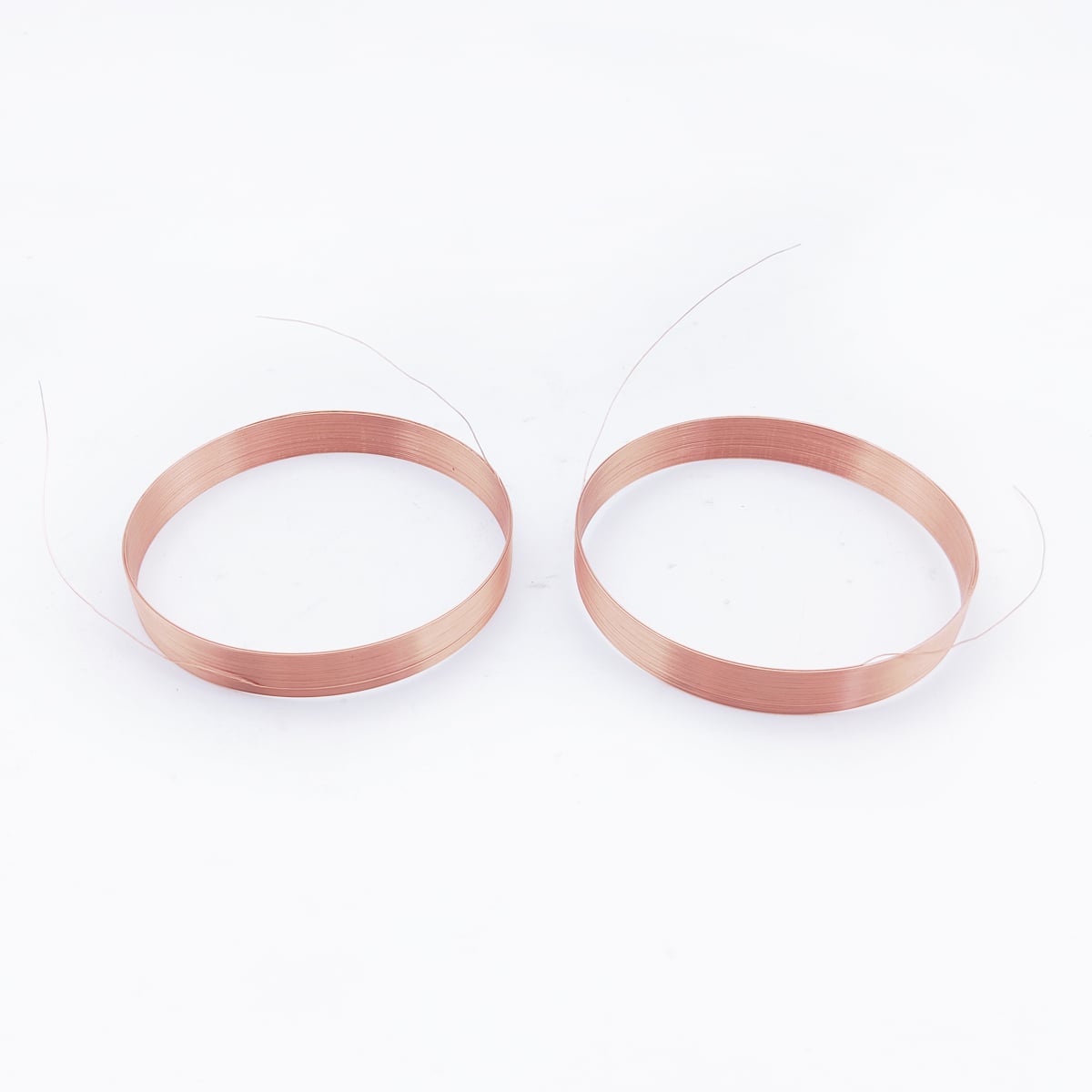
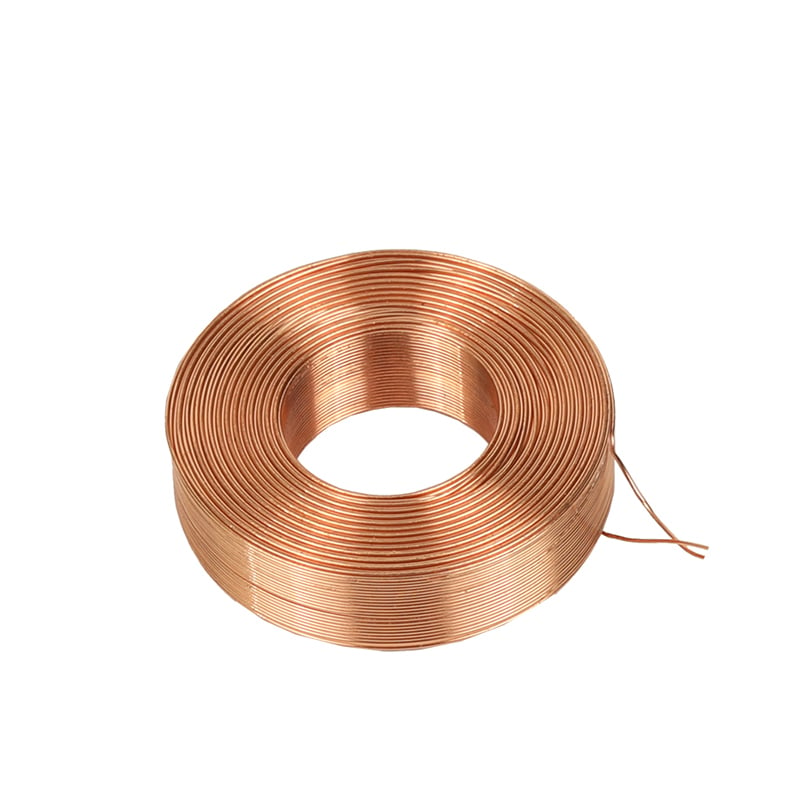
An air core coil functions without a magnetic material center, relying instead on the geometry and winding configuration to establish inductance and magnetic field characteristics. This fundamental design difference creates performance profiles that diverge significantly from ferrite core designs, particularly in high-frequency applications, signal fidelity environments, and scenarios demanding minimal harmonic distortion. Recognizing these performance boundaries empowers designers to optimize electromagnetic solutions for their specific industrial and commercial applications.
An air core coil excels in radiofrequency and broadband signal transmission where signal purity and predictable frequency response prove essential. Ferrite materials exhibit significant nonlinear characteristics at elevated signal levels, introducing harmonic distortion that degrades signal quality. An air core coil maintains linear inductance across a broader frequency spectrum, delivering consistent impedance matching and predictable phase response critical for communications equipment, measurement instrumentation, and high-fidelity audio systems. Engineers designing RF filters, tuning circuits, and broadband transformers frequently specify an air core coil to preserve signal integrity and minimize insertion loss across operational bandwidth.
The frequency response of an air core coil remains remarkably stable across extended operating ranges, a significant advantage ferrite materials cannot match. Ferrite core designs experience permeability collapse and increased losses at frequencies approaching saturation thresholds, limiting their effectiveness in wideband applications. An air core coil generates inductance through geometric factors rather than material saturation effects, enabling consistent performance from kilohertz ranges through gigahertz frequencies depending on physical construction. This frequency independence makes an air core coil the preferred choice for precision measurement equipment, spectrum analyzers, and communication systems where frequency stability directly impacts system accuracy and measurement validity.
Ferrite cores generate substantial core losses that translate into wasted heat and temperature-dependent performance variations. An air core coil produces no core material losses, eliminating a primary heat generation mechanism within inductive components. This thermal advantage proves particularly valuable in compact, high-density electronic assemblies where thermal management presents genuine engineering challenges. An air core coil maintains stable inductance values across temperature extremes, essential for precision instrumentation operating in extreme environments or requiring tightly controlled performance specifications throughout extended operational ranges.
The heat dissipation advantage of an air core coil reduces cooling requirements and associated system complexity. Applications eliminating ferrite core loss avoid expensive cooling solutions, reduced-footprint thermal management designs, and thermal cycling stress that degrades component longevity. An air core coil's inherent thermal stability permits reliable operation in challenging industrial environments where temperature fluctuations occur regularly. This thermal robustness extends component lifespan, reduces maintenance costs, and improves overall system reliability in demanding operational contexts where ferrite solutions require active temperature management.
An air core coil exhibits lower parasitic capacitance compared to ferrite-wound alternatives, directly resulting in higher self-resonant frequencies and cleaner frequency response characteristics. The distributed capacitance inherent in ferrite windings creates unpredictable resonance peaks that complicate circuit design and introduce harmonic content detrimental to sensitive electronics. An air core coil's reduced parasitic capacitance enables higher self-resonance frequencies, permitting operation across broader frequency ranges without encountering problematic resonance effects. Medical instrumentation, precision measurement devices, and sensitive communication equipment frequently employ an air core coil specifically to minimize parasitic capacitance and preserve signal fidelity in electromagnetically sensitive applications.
The absence of ferrite material and reduced distributed capacitance in an air core coil design inherently lowers susceptibility to electromagnetic interference and external field coupling. Ferrite cores, while offering high permeability advantages for certain applications, simultaneously concentrate external electromagnetic fields and increase susceptibility to EMI in crowded electromagnetic environments. An air core coil's open field geometry and low coupling coefficient with stray electromagnetic fields provide natural EMI immunity valuable in medical devices, aerospace electronics, and defense systems requiring robust electromagnetic compatibility. Designers working in electromagnetically congested environments frequently specify an air core coil to achieve superior EMI performance without requiring extensive electromagnetic shielding infrastructure.
Laboratory instrumentation, oscilloscopes, spectrum analyzers, and precision measurement devices leverage an air core coil's superior frequency response and minimal distortion characteristics. An air core coil enables accurate measurements across broad frequency ranges without the frequency-dependent performance limitations and harmonic distortion introduced by ferrite materials. The consistent impedance and predictable phase response of an air core coil prove essential for reference standards, calibration equipment, and measurement instruments where accuracy and repeatability demand elimination of material-dependent performance variations.
Cellular base stations, satellite communication terminals, and broadband transmission equipment frequently employ an air core coil in signal conditioning, impedance matching, and filtering applications. An air core coil's linear frequency response and minimal harmonic distortion preserve modulation fidelity and prevent signal degradation across communication bandwidth. An air core coil enables efficient signal coupling without ferrite saturation effects that compromise communication quality and limit signal handling capability. Modern broadband systems operating across multiple frequency bands benefit from an air core coil's bandwidth-independent performance characteristics and predictable electrical behavior.
High-fidelity audio equipment, studio recording systems, and precision audio transformers employ an air core coil to eliminate harmonic distortion and preserve musical signal integrity across audio frequency ranges. An air core coil's superior linearity compared to ferrite designs ensures transparent audio signal coupling without inducing characteristic colorization or harmonic artifacts associated with magnetic saturation. Audio engineers specify an air core coil in crossover networks, impedance matching transformers, and signal coupling stages where maintaining uncolored audio fidelity represents the primary performance objective.
Ferrite cores excel in low-frequency power applications, electromagnetic shielding scenarios, and applications requiring high inductance values in compact physical form. An air core coil requires larger physical dimensions to achieve equivalent inductance values, making ferrite preferable when space constraints or low-frequency power transfer dominate design requirements. Power supplies, wireless power transfer systems, and electromagnetic shielding applications benefit from ferrite's high permeability and compact form factor advantages that an air core coil cannot match.
An air core coil requires substantially larger conductor lengths and winding configurations to achieve equivalent inductance values compared to ferrite cores. The absence of magnetic material necessitates geometric optimization and increased winding complexity to establish required inductance levels. An air core coil occupies greater physical volume in low-frequency applications, presenting significant constraints in power supplies and energy storage applications where compact ferrite solutions provide superior space efficiency and inductance density.
Ferrite cores typically offer lower material costs and simpler manufacturing processes, reducing initial component expenses in high-volume production scenarios. An air core coil design often requires precision winding equipment and careful geometric optimization that increases manufacturing complexity. However, an air core coil eliminates core loss costs and reduces thermal management infrastructure expenses throughout system lifecycle. Total cost of ownership frequently favors an air core coil in precision instrumentation and broadband communication applications where thermal management and performance reliability create substantial lifetime expenses that offset higher component costs.
 Hot News
2026-09-21
2026-09-11
2026-09-08
2026-09-04
2026-09-01
2026-08-24
Zhongshan Landa Technology: ISO9001 & UL-certified manufacturer of custom electromagnets, push-pull solenoids, and induction coils for automation, medical, auto & appliances. Trusted global partner since 2008.
3F, Building 4, No.8 North Industrial Avenue Xiaolan, Xiaolan Town, Zhongshan, Guangdong, China
Copyright © Zhongshan Landa Technology Co., Ltd All Rights Reserved Privacy Policy

 EN
EN