 ×
×

Selecting the appropriate holding force rating for a magnetic lock system requires understanding how door configuration, weight, material composition, and operational environment interact with electromagnetic retention capabilities. A magnetic lock generates its holding power through electromagnetic attraction between the lock's electromagnet and a corresponding armature plate mounted on the door, creating a bond that resists forced entry. The holding force rating, typically measured in kilograms or pounds, directly determines whether the magnetic lock can reliably secure a specific door installation against unauthorized access attempts while maintaining consistent performance throughout its service life.
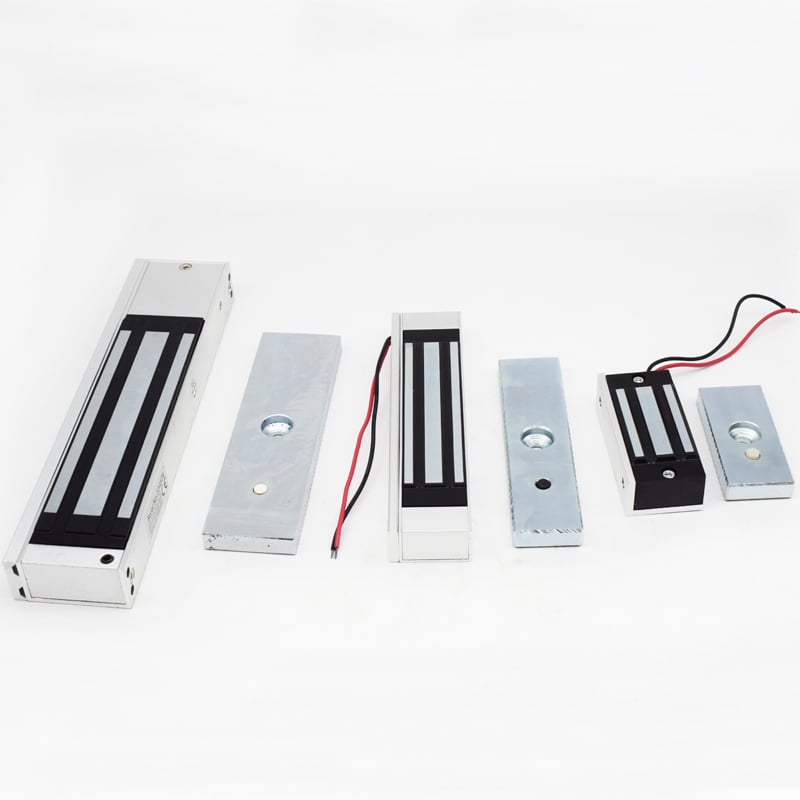
Door weight and structural characteristics establish the baseline requirement for magnetic lock holding force, but additional factors including wind load exposure, traffic frequency, door closing speed, and security threat level modify the final selection criteria. A magnetic lock rated at 180kg suits standard interior office doors with moderate traffic, while exterior doors exposed to weather conditions demand higher ratings to compensate for dynamic loading forces. Understanding these relationships enables facility managers and security professionals to specify magnetic lock solutions that balance security effectiveness with operational reliability and cost efficiency across diverse architectural applications.
The fundamental relationship between door weight and magnetic lock holding force begins with calculating the total mass of the door assembly, including the door leaf, hardware, glazing, and any integrated components. A magnetic lock must generate sufficient electromagnetic force to counteract both the static weight and the dynamic forces created during normal operation. Standard hollow metal doors weighing 30-50kg typically require a magnetic lock with 180kg holding force, providing a safety factor that accounts for impact loading when the door closes. Heavier solid core doors or glass doors weighing 60-90kg demand magnetic lock ratings of 280kg or higher to maintain security integrity.
The magnetic lock selection process must consider how door material affects the magnetic circuit efficiency. Steel doors create optimal magnetic flux pathways, allowing the magnetic lock to achieve its full rated holding force with proper installation alignment. Aluminum doors with steel reinforcement plates require careful armature plate positioning to ensure adequate magnetic lock contact area. Glass doors present unique challenges since the magnetic lock must grip a steel or aluminum frame rather than the door material itself, potentially requiring oversized magnetic lock ratings or specialized mounting brackets to compensate for reduced contact geometry and increased leverage on the magnetic lock assembly.
Beyond static door weight, magnetic lock specifications must account for dynamic loading scenarios that temporarily amplify the forces acting on the electromagnetic bond. High-traffic doors experiencing frequent operation cycles subject the magnetic lock to repeated impact stresses as users push or pull against the secured door. Wind loading on exterior doors can generate sustained lateral forces exceeding several hundred newtons, requiring the magnetic lock to maintain holding force under continuous stress. A properly specified magnetic lock includes a safety factor of 1.5 to 2.0 times the calculated static requirement, ensuring the electromagnetic lock retains effectiveness even when dynamic conditions peak during severe weather or heavy use periods.
The magnetic lock must also withstand deliberate forced entry attempts, where attackers apply sustained or impact forces significantly exceeding normal operational loads. Security assessments typically assume forced entry attempts generate forces between 300-500kg depending on attack method and duration. A magnetic lock rated at 280kg provides adequate resistance for medium-security interior applications, while high-security perimeter doors require magnetic lock ratings of 500kg or greater. The magnetic lock holding force must exceed the anticipated attack force while maintaining consistent electromagnetic performance throughout the product lifetime to ensure the access control system remains effective against evolving security threats.
Single door installations allow straightforward magnetic lock mounting with the electromagnet attached to the door frame header and the armature plate fixed to the door's top edge, creating a direct magnetic circuit path. The magnetic lock holding force rating for single doors follows standard weight-based calculations, with typical office doors requiring 180kg magnetic lock units and heavier entrance doors demanding 280kg electromagnetic locks. Single door magnetic lock installations benefit from simplified wiring, centralized control integration, and predictable holding force distribution across the entire contact surface, making them the preferred configuration for most interior access control applications where the magnetic lock must provide reliable security with minimal maintenance.
Double door configurations require either dual magnetic lock units or specialized magnetic lock designs that accommodate the center meeting stile arrangement. Independent magnetic lock units on each door leaf provide maximum holding force but require coordinated release signals and doubled installation costs. Alternatively, a single oversized magnetic lock can secure both doors through an extended electromagnet housing, though this approach demands precise alignment and may create uneven holding force distribution. Double door magnetic lock installations must address the inactive leaf security separately, often combining the magnetic lock with mechanical flush bolts or coordinator devices to ensure both leaves remain secured when the magnetic lock energizes, preventing bypass attempts through the less-protected door.
Hollow metal frames provide ideal magnetic lock mounting surfaces with sufficient structural rigidity and magnetic conductivity to support the electromagnetic unit without deflection or flux leakage. The magnetic lock attaches directly to the frame header through machine screws penetrating into the frame's steel structure, creating a solid anchor point that maintains precise alignment with the armature plate throughout repeated door cycles. Standard hollow metal frames accommodate magnetic lock units up to 500kg without reinforcement, though installers must verify the frame gauge and internal construction meet the magnetic lock manufacturer's specifications to prevent mounting failures or reduced holding force from inadequate frame support.
Wood frames and aluminum storefront systems require modified magnetic lock mounting approaches to address reduced structural strength and altered magnetic properties. Wood frame installations typically employ through-bolting with backing plates to distribute the magnetic lock mounting loads across a larger frame area, preventing the electromagnetic unit from pulling loose under stress. Aluminum frames demand ferrous metal reinforcement channels within the frame header to complete the magnetic circuit, since aluminum's non-ferromagnetic properties severely degrade magnetic lock holding force. The magnetic lock selection for non-standard frames must account for potential holding force reductions of 10-25 percent compared to steel frame installations, requiring upgraded magnetic lock ratings to maintain equivalent security levels across different architectural systems.
Interior magnetic lock installations operate in controlled environmental conditions with stable temperatures, minimal moisture exposure, and reduced contamination risks, allowing standard magnetic lock designs to achieve their rated holding force consistently. Indoor magnetic lock units typically feature basic weather sealing adequate for climate-controlled spaces, focusing electromagnetic performance optimization over environmental protection. The magnetic lock holding force remains stable across the typical 15-30°C indoor temperature range, and the electromagnetic coil maintains consistent resistance values that deliver predictable power consumption and reliable operation throughout extended service periods with minimal degradation affecting the magnetic lock performance.
Exterior magnetic lock applications demand weatherproof enclosures, corrosion-resistant materials, and expanded temperature operation ranges to maintain holding force under harsh environmental exposure. Outdoor magnetic lock units incorporate sealed housings with gaskets preventing moisture ingress that could short-circuit the electromagnetic coil or corrode the magnetic lock contact surfaces. Temperature extremes affect magnetic lock performance through changes in coil resistance and magnetic material properties, requiring oversized electromagnetic units or temperature-compensated power supplies to maintain rated holding force when the magnetic lock operates in -40°C to +70°C conditions. The magnetic lock must resist UV degradation, salt spray corrosion, and thermal cycling stresses that accelerate component aging in exterior installations, often necessitating commercial-grade or military-specification magnetic lock products for reliable long-term outdoor performance.
High-traffic magnetic lock installations experience accelerated wear on both the electromagnetic components and mechanical mounting hardware due to repeated energization cycles and door impact loads. A magnetic lock serving a main entrance with 500+ daily passages must withstand continuous electromagnetic coil heating, repetitive current surges during lock/unlock transitions, and mechanical shock transmission from door closures. The magnetic lock holding force can degrade over time as contact surfaces wear or mounting alignment shifts, requiring periodic inspection and adjustment to maintain security effectiveness. Heavy-duty magnetic lock models incorporate oversized electromagnetic coils with enhanced thermal mass, reinforced mounting brackets, and hardened contact surfaces that resist wear progression, extending the magnetic lock service life in demanding applications.
The magnetic lock duty cycle percentage indicates the proportion of time the electromagnetic unit remains energized versus de-energized during normal operation. Continuously energized magnetic lock installations, common in fail-secure access control systems, generate constant heat within the electromagnetic coil that must dissipate through the magnetic lock housing to prevent thermal degradation. A magnetic lock operating at 100 percent duty cycle requires adequate heat sinking and may need derating to 80-90 percent of nominal holding force to prevent overheating during sustained operation. Intermittent-duty magnetic lock applications, where the electromagnetic unit energizes only during secured periods, allow smaller coil designs and reduced power consumption but must account for thermal shock stresses during rapid energization cycles that can affect long-term magnetic lock reliability and holding force consistency.
A standard interior office door weighing 30-50kg with hollow metal or wood core construction typically requires a magnetic lock rated at 180kg holding force. This rating provides adequate security for low to medium threat environments while accommodating normal door operation impacts and minor misalignment tolerances. The 180kg magnetic lock specification includes a safety factor sufficient for typical office access control applications where the electromagnetic lock must resist casual unauthorized entry attempts without excessive cost or power consumption. Higher security requirements or heavier door assemblies may warrant upgrading to 280kg magnetic lock ratings to ensure consistent holding force under all operational conditions.
Exterior door weight directly influences magnetic lock selection, but additional factors including wind loading, weather sealing requirements, and enhanced security expectations typically drive specifications beyond weight-based calculations alone. A 60kg exterior door might require a 280kg or 350kg magnetic lock rather than the 180kg unit sufficient for a similar-weight interior door. The elevated magnetic lock rating compensates for dynamic wind forces, provides margin against forced entry attempts, and accounts for potential holding force degradation from environmental exposure affecting the electromagnetic lock components. Exterior magnetic lock specifications should incorporate safety factors of 2.0 or greater relative to static door weight to ensure reliable security performance throughout seasonal weather variations.
A single magnetic lock can secure double door configurations through specialized electromagnetic units featuring extended housings that span both door leaves, though this approach requires precise installation alignment and may create uneven holding force distribution between active and inactive leaves. Most double door magnetic lock installations employ independent electromagnetic units on each leaf, providing balanced holding force and simplified alignment requirements. The dual magnetic lock approach allows each electromagnetic unit to be sized appropriately for its respective door weight and operational characteristics, ensuring consistent security across both leaves. Single magnetic lock solutions work best for narrow double doors with minimal width variation between leaves, while wider or asymmetric double door configurations benefit from separate magnetic lock units that can be independently adjusted and maintained.
 Hot News
2026-08-24
2026-08-17
2026-08-17
2026-08-10
2026-08-03
2026-07-30
Zhongshan Landa Technology: ISO9001 & UL-certified manufacturer of custom electromagnets, push-pull solenoids, and induction coils for automation, medical, auto & appliances. Trusted global partner since 2008.
3F, Building 4, No.8 North Industrial Avenue Xiaolan, Xiaolan Town, Zhongshan, Guangdong, China
Copyright © Zhongshan Landa Technology Co., Ltd All Rights Reserved Privacy Policy

 EN
EN