 ×
×

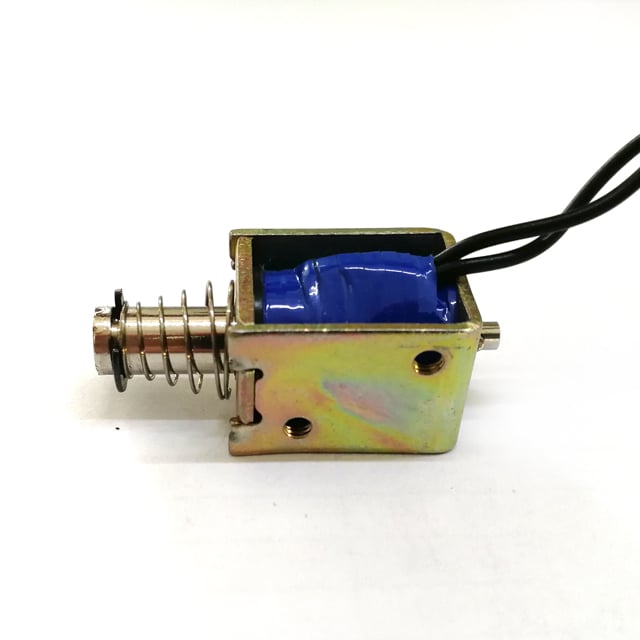
A bistable solenoid represents a significant shift in how industrial automation handles energy efficiency and operational reliability. Unlike conventional solenoids that require continuous power to maintain a switched state, a bistable solenoid retains its position without drawing current once activated, making it an ideal solution for applications where power consumption and heat generation must be minimized. Understanding when and where to deploy a bistable solenoid is essential for engineers designing systems that balance performance with sustainability and cost reduction.
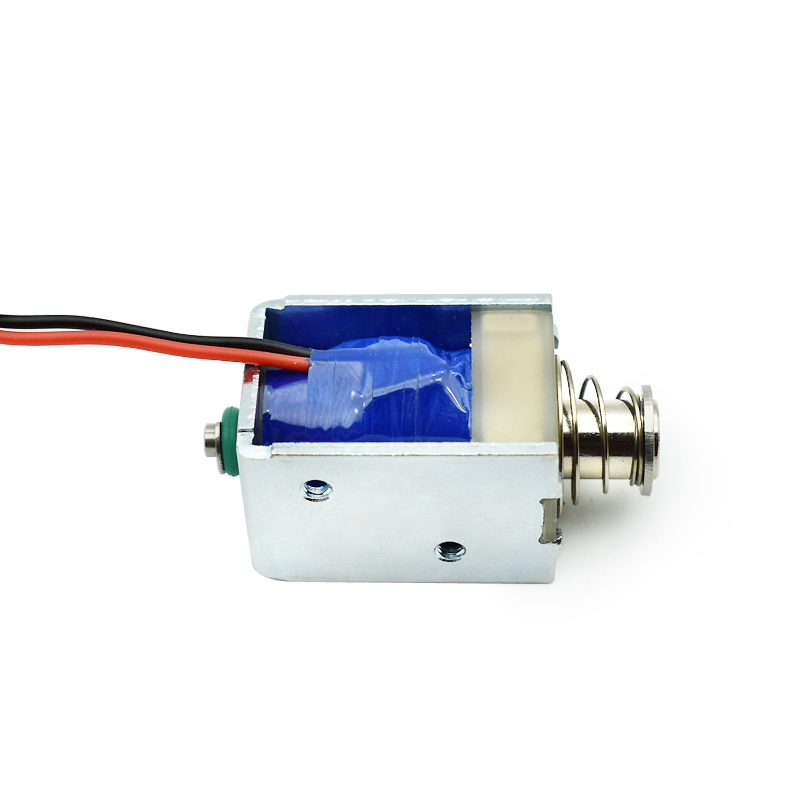
The fundamental advantage of a bistable solenoid lies in its zero-power holding capability. Once energized to switch states, the magnetic force remains stable without ongoing electrical input, eliminating the waste associated with holding current. This characteristic makes the bistable solenoid particularly valuable in battery-powered equipment, remote systems, and scenarios where thermal management is critical. Organizations increasingly recognize that deploying a bistable solenoid directly addresses energy budgets while improving system reliability and reducing operational costs.
Traditional solenoids consume power continuously to maintain an energized state, generating heat and requiring larger power supplies or battery capacity. A bistable solenoid operates differently by using permanent magnets and a mechanical latching mechanism to hold position indefinitely without electrical current. This fundamental design difference means that once a bistable solenoid switches, energy is only needed for the brief moment of state change, not for sustained operation. In battery-powered applications, this translates to extended runtime and reduced battery replacement frequency. For industrial environments, lower power consumption reduces cooling requirements and lowers overall energy bills.
Calculating the true cost of implementing a bistable solenoid requires examining initial purchase price, installation, power infrastructure, maintenance, and end-of-life considerations. While a bistable solenoid may carry a higher upfront cost than a standard solenoid, the operational savings accumulate quickly in high-cycle or continuous-duty applications. Reduced power consumption means smaller power supply units, simplified wiring, and decreased facility cooling loads. A bistable solenoid installed in an automated parking gate, storage system, or valve control application can recover its investment within months through electrical savings alone. Organizations deploying a bistable solenoid also benefit from simplified troubleshooting, since thermal failures related to sustained holding current are eliminated.
Remote installations, renewable energy systems, and off-grid equipment rely on finite power sources where every watt-hour matters. A bistable solenoid excels in these environments because it switches once and holds indefinitely, respecting strict energy budgets. Weather monitoring stations, remote gate controls, solar-powered irrigation systems, and backup power systems all benefit from a bistable solenoid approach. Battery longevity directly impacts maintenance frequency and accessibility, making the bistable solenoid a practical choice for hard-to-reach installations. Engineers designing off-grid automation select a bistable solenoid specifically to extend intervals between service visits and battery replacements.
Manufacturing environments and material handling systems often require solenoid switching hundreds or thousands of times per shift, followed by extended holding periods. A bistable solenoid handles this duty cycle efficiently because the holding phase consumes no power, only the switching moment demands electrical input. Pneumatic valve controllers, hydraulic manifolds, and automated sorting systems all benefit from a bistable solenoid configuration that supports rapid cycling without thermal stress. The bistable solenoid also simplifies system design by reducing cooling requirements and allowing smaller power distribution components. Facilities operating machinery around the clock find that a bistable solenoid reduces operating costs significantly while improving component lifespan.
Emergency shutdown systems, emergency brakes, and safety interlocks often require that a mechanism hold a safe position even if power is lost. A bistable solenoid naturally supports this requirement because its holding force is magnetic, not electrical. Once positioned by a bistable solenoid, the system stays secure regardless of power availability, meeting safety certifications and regulatory mandates. Elevator brake control, emergency exit locks, and fire suppression valve hold positions all employ a bistable solenoid logic where zero-power holding is a safety asset, not merely a convenience. Engineers designing fail-safe systems gravitate toward a bistable solenoid specifically for this inherent reliability advantage.
A bistable solenoid requires bidirectional control pulses to switch between two stable states, differing fundamentally from unidirectional solenoid wiring. Control circuits for a bistable solenoid must deliver polarity-reversing current pulses rather than continuous energization, often necessitating a dual-coil configuration or a bridge circuit. Modern designs often integrate a bistable solenoid with simple toggle switches, programmable controllers, or sensor-based logic that sends brief pulses on demand. System designers must account for the fact that a bistable solenoid pulse is typically shorter and lower-energy than maintaining a standard solenoid in the on state. Proper pulse timing and current specification are critical; undersized pulses may fail to reliably switch a bistable solenoid, while excessive current serves no purpose and wastes energy.
A bistable solenoid produces actuation force only during the switching moment; it does not provide continuous pushing or pulling force like a standard solenoid. Load calculations for a bistable solenoid application must therefore focus on the force required to initiate motion, not sustain it, since the mechanical system's inertia and friction typically complete the movement. Mounting a bistable solenoid requires precise alignment to ensure reliable stroke and prevent binding or chattering during transitions. Spring return, pneumatic assist, or gravity may support the bistable solenoid mechanism depending on the application. Designers evaluating a bistable solenoid installation must verify that load mass, friction, and geometry all support reliable operation throughout the expected temperature and duty cycle range.
Because a bistable solenoid generates minimal heat during operation, it tolerates temperature extremes better than power-hungry alternatives. Sealed and potted designs protect a bistable solenoid from moisture, vibration, and contaminant ingress in harsh industrial environments. The absence of sustained current flow through the coil means a bistable solenoid experiences lower thermal stress and typically achieves longer operational life. However, the permanent magnets within a bistable solenoid do have temperature sensitivity; high temperatures can degrade magnetic strength, so temperature monitoring remains important. Properly specified bistable solenoid selections account for ambient conditions and include margin for thermal variation across the product's lifetime.
The primary advantage of a bistable solenoid is zero-power holding. Once energized to switch states, a bistable solenoid maintains position without drawing current, eliminating continuous power consumption, heat generation, and related infrastructure costs. Standard solenoids require sustained current to hold position, consuming energy and generating heat throughout the holding period. This fundamental difference makes a bistable solenoid ideal for battery-powered, remote, and energy-conscious applications where operational costs and thermal management are concerns.
A bistable solenoid reduces operational costs by decreasing electrical consumption, enabling smaller power supply components, and reducing cooling requirements. In high-cycle or continuous-duty applications, the energy savings from eliminating holding current accumulate significantly. Additionally, a bistable solenoid experiences less thermal stress, extending component lifespan and reducing maintenance frequency. Organizations deploying a bistable solenoid often recover the higher initial purchase cost within months through lower utility bills and reduced downtime associated with thermal failures or component replacement.
Yes, bistable solenoids are excellent for safety-critical applications because their holding force is magnetic, not electrical. If power fails, a bistable solenoid maintains its position without requiring continued energization, naturally supporting fail-safe design. Emergency brakes, safety interlocks, and emergency exit systems all benefit from a bistable solenoid's ability to hold a safe position regardless of power availability. This inherent reliability makes a bistable solenoid a preferred choice for systems requiring regulatory compliance and certified fail-safe behavior.
 Hot News
2026-09-21
2026-09-11
2026-09-08
2026-09-04
2026-09-01
2026-08-24
Zhongshan Landa Technology: ISO9001 & UL-certified manufacturer of custom electromagnets, push-pull solenoids, and induction coils for automation, medical, auto & appliances. Trusted global partner since 2008.
3F, Building 4, No.8 North Industrial Avenue Xiaolan, Xiaolan Town, Zhongshan, Guangdong, China
Copyright © Zhongshan Landa Technology Co., Ltd All Rights Reserved Privacy Policy

 EN
EN