 ×
×

Commercial security infrastructure demands solutions that deliver consistent performance under constant operational stress. Among access control technologies, the electromagnetic door lock has maintained its position as the industry benchmark for high-traffic environments. This dominance stems from fundamental engineering advantages that align with the core requirements of modern commercial facilities. Understanding why the electromagnetic door lock continues to serve as the foundation of commercial security systems requires examining the specific operational characteristics that distinguish this technology from mechanical alternatives.
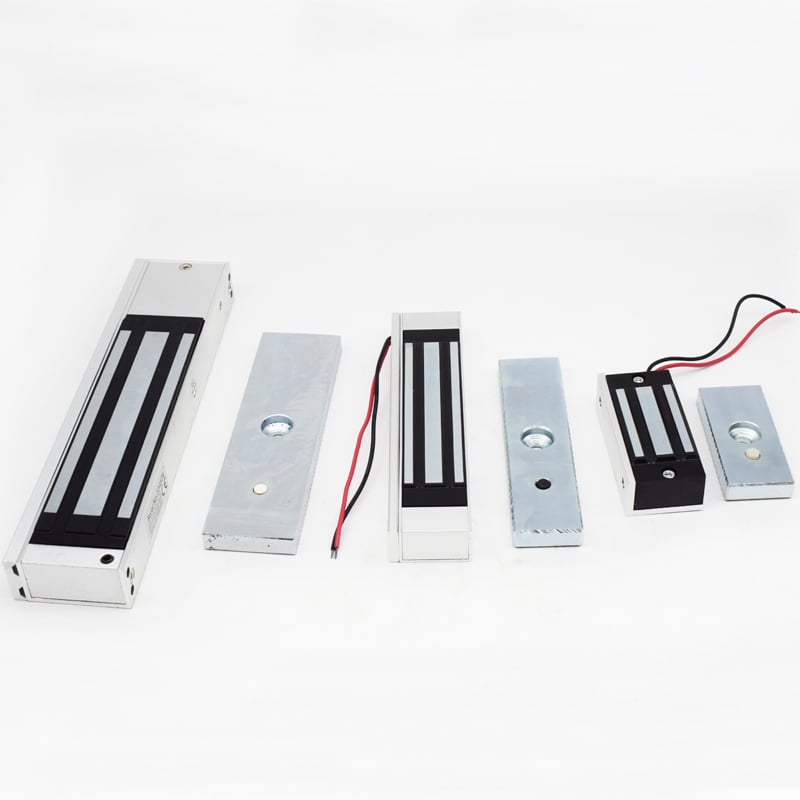
The resilience of the electromagnetic door lock in commercial applications reflects a convergence of reliability engineering, safety compliance requirements, and operational cost considerations. Facilities ranging from corporate offices to healthcare institutions rely on the electromagnetic door lock to maintain secure perimeters while accommodating thousands of daily access events. This technology addresses the practical challenges that make mechanical locking mechanisms unsuitable for commercial environments where continuous operation, emergency egress capability, and minimal maintenance become critical selection criteria.
The electromagnetic door lock operates on a straightforward principle that eliminates the mechanical complexity inherent in traditional locking systems. When electrical current energizes the electromagnet, it creates a magnetic field that bonds the armature plate to the magnet body with holding forces typically ranging from 600 to 1,200 pounds. This electromagnetic door lock design contains no moving parts in its primary locking mechanism, which directly translates to reduced wear patterns and extended operational lifespan. Commercial environments that generate 500 to 2,000 access events daily benefit from this mechanical simplicity because the electromagnetic door lock experiences no friction-based degradation that affects conventional locks with pins, tumblers, and mechanical linkages.
Building codes and fire safety regulations mandate that commercial egress doors unlock automatically during emergencies. The electromagnetic door lock inherently operates as a fail-safe device because it requires continuous electrical power to maintain its locked state. When power interruption occurs through fire alarm activation, manual release, or power failure, the electromagnetic door lock immediately releases, allowing unrestricted egress. This fail-safe characteristic makes the electromagnetic door lock the preferred solution for stairwell doors, corridor barriers, and perimeter exits where occupant safety takes precedence over security concerns. Alternative locking technologies that require active power for unlocking create compliance complications that increase installation complexity and regulatory approval timelines.
Modern commercial security operates through networked access control platforms that manage credential verification, audit logging, and real-time monitoring. The electromagnetic door lock interfaces seamlessly with these systems through simple voltage control circuits. Access control panels energize the electromagnetic door lock through relay outputs when valid credentials are presented, creating a direct electrical pathway that eliminates the mechanical actuators required by electric strikes or motorized locks. This integration simplicity allows the electromagnetic door lock to function reliably within complex security architectures that incorporate card readers, biometric scanners, and remote management capabilities without introducing mechanical points of failure.
Commercial facilities operate under conditions that expose locking hardware to environmental stresses absent in residential applications. The electromagnetic door lock maintains consistent holding force regardless of cycle frequency because its magnetic attraction does not degrade through repeated engagement. Testing protocols demonstrate that an electromagnetic door lock can complete millions of lock-unlock cycles without measurable performance degradation. This durability characteristic becomes economically significant in airports, hospitals, and educational institutions where hardware replacement costs include not only material expenses but also labor, access disruption, and security vulnerabilities during maintenance windows.
Exterior applications expose security hardware to temperature fluctuations, moisture intrusion, and UV radiation that accelerate mechanical component failure. The electromagnetic door lock design encapsulates its coil windings and magnetic core within sealed housings that resist environmental degradation. Unlike mechanical locks where moisture causes corrosion in pin chambers and ice formation prevents bolt movement, the electromagnetic door lock continues operating in temperature ranges from negative 40 to positive 140 degrees Fahrenheit. This environmental resilience makes the electromagnetic door lock suitable for loading dock access points, parking structure entrances, and rooftop access doors where mechanical alternatives require frequent lubrication and seasonal maintenance.
Healthcare facilities, libraries, and corporate environments prioritize acoustic comfort alongside security functionality. The electromagnetic door lock engages and releases silently because its locking action involves magnetic attraction rather than mechanical bolt movement. This operational characteristic distinguishes the electromagnetic door lock from electric strikes that produce audible clicks and motorized locks that generate motor noise during actuation. The silent operation of the electromagnetic door lock eliminates acoustic disruptions in patient care areas, recording studios, and executive office suites where mechanical lock sounds would compromise the environmental quality that occupants expect.
Initial hardware costs represent only one component of security system economics. The electromagnetic door lock delivers superior total cost of ownership through reduced maintenance requirements and extended replacement cycles. Mechanical locks require periodic lubrication, spring replacement, and adjustment services that generate recurring labor expenses. The electromagnetic door lock eliminates these maintenance activities because its electromagnetic coil either functions correctly or fails completely, creating predictable replacement intervals rather than progressive performance degradation. Facility managers report that the electromagnetic door lock reduces security hardware maintenance costs by 60 to 75 percent compared to mechanical alternatives over ten-year operational periods.
Commercial security upgrades often occur in occupied buildings where construction disruption must be minimized. The electromagnetic door lock mounts to the door frame header with standard fasteners and requires only low-voltage power wiring, creating installation processes that typically complete in 30 to 45 minutes per opening. This installation efficiency reduces labor costs and building disruption compared to mortise lock replacement that requires door preparation, frame modification, and mechanical linkage alignment. The electromagnetic door lock adapts to various door configurations including wood, aluminum, and glass assemblies without requiring specialized mounting hardware or structural reinforcement.
Organizations managing multiple facilities benefit from the electromagnetic door lock standardization because it creates consistent security performance across diverse property types. Corporate real estate portfolios, retail chains, and educational systems specify the electromagnetic door lock as their standard perimeter security solution because it delivers predictable performance regardless of building age, architectural style, or geographic location. This standardization simplifies procurement processes, reduces spare parts inventory requirements, and allows maintenance personnel to develop expertise with a single technology platform rather than managing multiple locking hardware types.
The electromagnetic door lock releases when power is lost, which prioritizes life safety over security. For applications requiring security during power failures, facilities install battery backup systems that maintain electromagnetic door lock power for predetermined durations, typically ranging from 30 minutes to 4 hours depending on battery capacity and the number of electromagnetic door lock units served by the backup system.
Standard commercial applications use electromagnetic door lock units rated at 600 to 800 pounds of holding force, which exceeds the force that individuals can apply through pushing or pulling. High-security applications such as data centers or pharmaceutical storage areas may specify electromagnetic door lock units rated at 1,200 pounds or higher to resist forced entry attempts. The electromagnetic door lock holding force should be matched to the door weight, traffic volume, and threat assessment for each specific opening.
The electromagnetic door lock functions independently of mechanical key cylinders, allowing facilities to maintain mechanical key override capability alongside electronic access control. This dual-credential approach provides operational flexibility where the electromagnetic door lock serves as the primary access control mechanism while mechanical keys provide backup access for maintenance personnel or emergency response teams. The electromagnetic door lock does not interfere with mechanical lock operation, and both systems can be installed on the same door assembly.
 Hot News
2026-10-15
2026-10-13
2026-10-08
2026-10-06
2026-10-01
2026-09-21
Zhongshan Landa Technology: ISO9001 & UL-certified manufacturer of custom electromagnets, push-pull solenoids, and induction coils for automation, medical, auto & appliances. Trusted global partner since 2008.
3F, Building 4, No.8 North Industrial Avenue Xiaolan, Xiaolan Town, Zhongshan, Guangdong, China
Copyright © Zhongshan Landa Technology Co., Ltd All Rights Reserved Privacy Policy

 EN
EN