 ×
×

Choosing the correct holding force for an electromagnetic door lock is one of the most important decisions in any access control project. If the holding force is too low, the door can be forced open under pressure. If it is too high, you may be over-engineering the installation, wasting budget, and creating unnecessary mechanical stress on the door frame. Understanding how door type and door weight interact with holding force specifications will help you select the right electromagnetic door lock for every scenario.
Every electromagnetic door lock is rated by its holding force, typically expressed in kilograms or pounds. This rating tells you how much direct pull force the lock can resist when energized. However, the rated holding force of an electromagnetic door lock does not operate in isolation. The door material, door size, mounting position, swing direction, and daily traffic volume all influence which holding force rating you actually need. This guide breaks down the specification logic so you can make confident, accurate decisions for any door type and weight combination.
A heavier door requires a stronger electromagnetic door lock because the mass of the door itself generates momentum during opening attempts. For lightweight interior doors weighing under 40 kg, an electromagnetic door lock rated at 60 kg to 180 kg of holding force is generally sufficient. These doors are common in office partitions, restroom entries, and light commercial spaces where security demands are moderate and traffic is low to medium.
For medium-weight doors in the 40 kg to 80 kg range, such as solid timber doors or hollow metal doors used in commercial buildings, an electromagnetic door lock rated at 280 kg is typically the standard choice. This holding force provides a reliable safety margin while remaining compatible with standard door frames and mounting hardware. Specifying an electromagnetic door lock at this level ensures the door resists unauthorized forced entry without requiring reinforced frame modifications.
Doors exceeding 80 kg in weight, including steel security doors, heavy fire doors, and industrial access doors, demand an electromagnetic door lock rated at 350 kg or 500 kg. These electromagnetic door lock units provide the robustness required for perimeter security, server rooms, data centers, and high-traffic industrial entry points. At this weight range, the electromagnetic door lock must also withstand repeated mechanical stress from door slamming and vibration, so build quality and armature plate alignment become critical factors alongside the holding force rating.
A single swing door is the most common application for an electromagnetic door lock. For standard aluminum-framed glass doors found in office lobbies, a 180 kg electromagnetic door lock is typically appropriate, assuming the door weighs between 30 kg and 50 kg. The electromagnetic door lock is mounted at the top of the door, and the armature plate attaches to the door leaf. Proper alignment is essential because even a small misalignment reduces the effective holding force of the electromagnetic door lock significantly.
Wooden single swing doors in commercial interiors are well-served by a 280 kg electromagnetic door lock. This rating covers the typical weight range of solid wood commercial doors and provides sufficient resistance for moderate-security environments. If the door is wider than 900 mm, you should also account for the lever effect, where pressure applied farther from the hinge point multiplies the force acting on the electromagnetic door lock.
Double door configurations require two electromagnetic door lock units, one per leaf, with each electromagnetic door lock sized according to the individual leaf weight rather than the combined weight. Sliding doors present a different challenge because the electromagnetic door lock must be mounted on the side or top frame, and the holding force must account for lateral movement rather than a swinging pull. In these cases, always verify that the electromagnetic door lock mounting bracket is compatible with the door track system and that the armature plate achieves full surface contact.
For frameless glass doors, which are increasingly common in modern office and retail environments, a surface-mounted electromagnetic door lock rated at 280 kg or 350 kg is advisable. Glass doors are often lighter but the lack of a rigid frame means that the electromagnetic door lock mounting must distribute load across a wider bracket system. Consult the door manufacturer's specifications before finalizing the electromagnetic door lock selection to avoid frame stress or glass cracking over time.
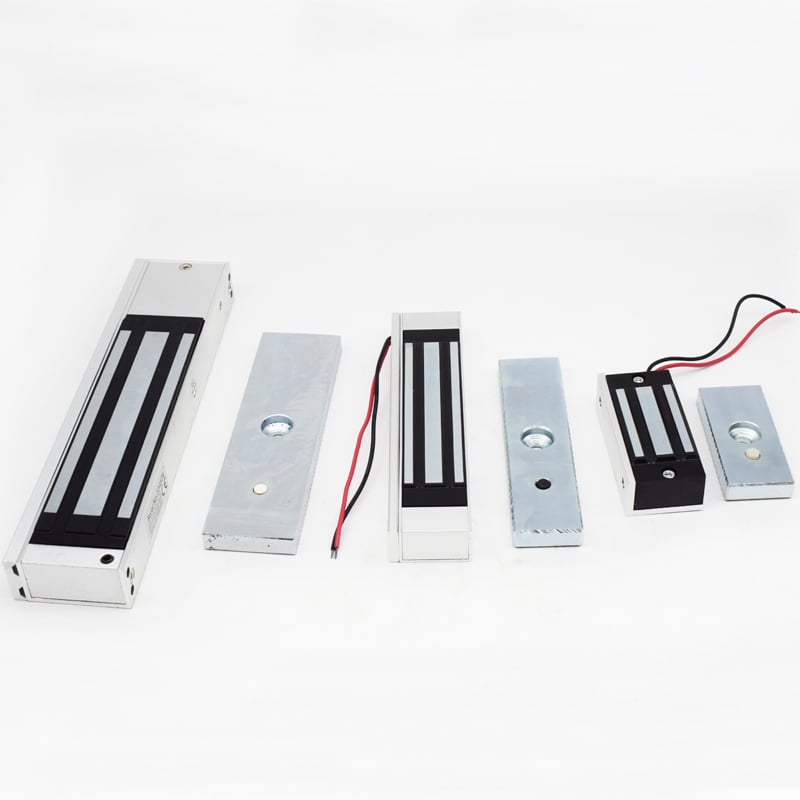
High-traffic doors, such as those in hospitals, schools, or transit terminals, require an electromagnetic door lock with a higher duty cycle rating in addition to adequate holding force. An electromagnetic door lock that is energized and de-energized hundreds of times per day must be built to handle thermal load and coil fatigue. In these environments, specifying an electromagnetic door lock one tier above the minimum holding force requirement adds a practical safety margin that extends operational lifespan.
Fire safety codes in many jurisdictions require that an electromagnetic door lock release immediately upon fire alarm activation or power failure. This means the electromagnetic door lock must be integrated with the building's fire alarm and emergency systems. Always confirm that the electromagnetic door lock you specify is fail-safe by design, meaning it releases when power is cut, which is the standard configuration for life-safety compliance in commercial and public buildings.
An electromagnetic door lock installed in an outdoor or high-humidity environment requires an IP-rated housing to prevent moisture ingress and corrosion. Stainless steel armature plates and sealed coil housings are standard features on exterior-grade electromagnetic door lock models. In coastal or chemical-exposure environments, the electromagnetic door lock should be inspected regularly for armature plate surface oxidation, which reduces magnetic contact efficiency and lowers the effective holding force below the rated specification.
For a standard frameless or aluminum-framed office glass door weighing between 30 kg and 50 kg, an electromagnetic door lock rated at 180 kg to 280 kg is recommended. The 280 kg electromagnetic door lock provides a comfortable safety margin and is compatible with most standard glass door mounting hardware available in the market.
No. A double door installation requires one electromagnetic door lock per door leaf. Each electromagnetic door lock should be specified based on the weight and size of its individual leaf. Using a single electromagnetic door lock on a double door is not recommended because it creates an unbalanced hold and reduces overall security reliability.
Generally, yes. A higher holding force electromagnetic door lock uses a larger coil and draws more current. Most electromagnetic door lock units operate on 12V or 24V DC, but higher-rated models may draw more amperage. Always check the power consumption specification of the electromagnetic door lock before selecting your power supply to ensure the system can support the load without voltage drop issues.
 Hot News
2026-10-15
2026-10-13
2026-10-08
2026-10-06
2026-10-01
2026-09-21
Zhongshan Landa Technology: ISO9001 & UL-certified manufacturer of custom electromagnets, push-pull solenoids, and induction coils for automation, medical, auto & appliances. Trusted global partner since 2008.
3F, Building 4, No.8 North Industrial Avenue Xiaolan, Xiaolan Town, Zhongshan, Guangdong, China
Copyright © Zhongshan Landa Technology Co., Ltd All Rights Reserved Privacy Policy

 EN
EN