 ×
×

Commercial facilities face mounting pressure to implement access control systems that balance security, operational efficiency, and long-term reliability. Among available locking technologies, the magnetic lock has emerged as the dominant solution for modern commercial environments. This electromagnetic locking mechanism delivers consistent holding force, eliminates mechanical wear points, and integrates seamlessly with electronic access control infrastructure. Understanding why the magnetic lock outperforms traditional alternatives reveals critical advantages for facility managers, security professionals, and commercial property owners.
The commercial access control landscape demands locking solutions that withstand high-frequency operation while maintaining security integrity. The magnetic lock addresses these requirements through electromagnetic principles rather than mechanical components. This fundamental design difference explains why the magnetic lock dominates applications ranging from corporate offices to healthcare facilities, educational institutions to retail environments. The operational characteristics of the magnetic lock align precisely with commercial security priorities, creating measurable advantages over conventional locking mechanisms.
The magnetic lock generates holding force through electromagnetic induction when electrical current energizes the coil within the lock body. This energized coil creates a powerful magnetic field that bonds the armature plate to the electromagnet face. The magnetic lock typically produces holding forces ranging from 60 kilograms to 500 kilograms depending on the model specification. This electromagnetic bonding occurs instantly when power is applied, and the magnetic lock maintains consistent holding force throughout the energized state. Unlike mechanical locks that rely on bolt projection and strike plate engagement, the magnetic lock achieves security through surface-to-surface electromagnetic attraction across the entire contact area.
The magnetic lock operates without moving parts in the locking mechanism itself, eliminating the primary failure mode of traditional locks. Mechanical locks experience wear on tumblers, springs, bolts, and strike plates, but the magnetic lock avoids these degradation points entirely. The magnetic lock remains fail-safe by design, automatically releasing when power is interrupted, which satisfies fire code requirements for emergency egress. This fail-safe characteristic makes the magnetic lock ideal for commercial applications where life safety codes mandate unobstructed exit pathways. The magnetic lock also operates silently, an important consideration in professional environments where mechanical lock noise would be disruptive. Commercial facilities benefit from the magnetic lock's ability to function reliably across millions of access cycles without mechanical maintenance.
Commercial facilities experience access frequencies that quickly expose weaknesses in mechanical locking systems. The magnetic lock withstands high-traffic conditions because electromagnetic holding force does not degrade with repeated use. A properly installed magnetic lock maintains full holding force whether it has completed one hundred cycles or one hundred thousand cycles. This durability factor makes the magnetic lock economically superior for commercial applications where lock replacement costs include not only hardware but also labor, door downtime, and security vulnerabilities. The magnetic lock eliminates the gradual security degradation that occurs as mechanical lock components wear, ensuring consistent access control performance throughout the system lifecycle.
Modern commercial security demands centralized control, audit trails, and credential management capabilities. The magnetic lock integrates seamlessly with electronic access control systems through simple power control signaling. Access control panels energize or de-energize the magnetic lock based on credential validation, time schedules, or security protocols. This electronic integration allows the magnetic lock to participate in sophisticated access control strategies including anti-passback, visitor management, and time-zone restrictions. The magnetic lock responds instantly to electronic commands, enabling real-time access control that mechanical locks cannot match. Commercial facilities benefit from the magnetic lock's compatibility with card readers, biometric devices, and mobile credential systems, creating flexible access control architectures that adapt to changing security requirements.
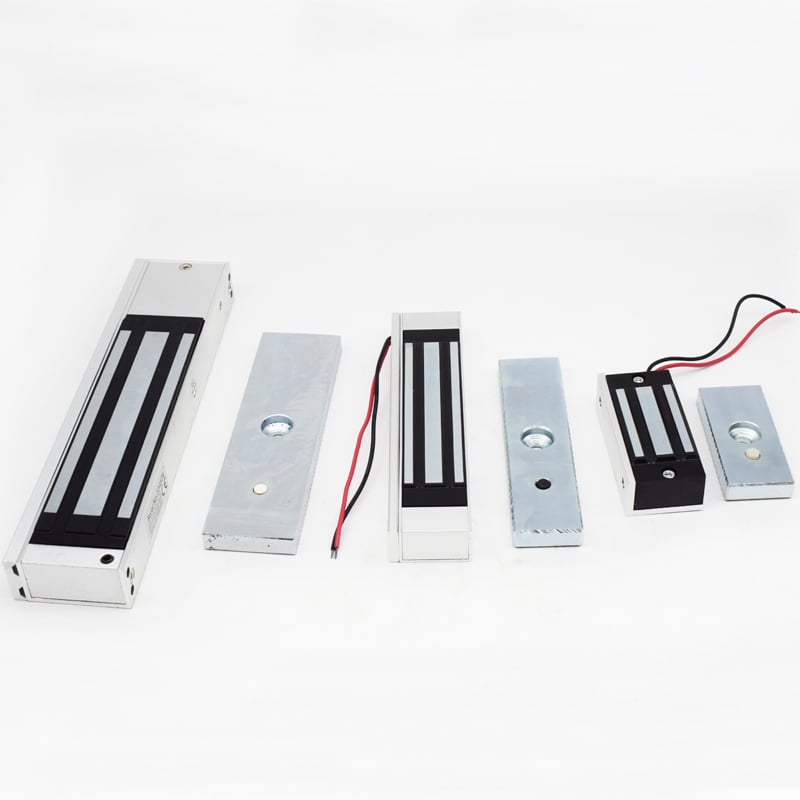
Building codes and fire safety regulations strictly govern locking systems in commercial occupancies. The magnetic lock inherently satisfies fail-safe egress requirements because power interruption automatically releases the door. This fail-safe operation makes the magnetic lock compliant with NFPA 101 Life Safety Code provisions for delayed egress and controlled egress applications when properly configured. The magnetic lock eliminates concerns about occupants becoming trapped during fire alarm activation or power failure events. Commercial property owners value the magnetic lock's ability to maintain security during normal operations while guaranteeing emergency exit capability. The magnetic lock can be integrated with fire alarm systems, emergency push buttons, and request-to-exit devices to create code-compliant access control solutions that balance security and life safety priorities.
The total cost of ownership for access control systems extends beyond initial hardware acquisition. The magnetic lock delivers lifecycle cost advantages through reduced maintenance requirements, extended operational life, and minimal replacement frequency. Mechanical locks require regular maintenance, key management, rekeying services, and eventual replacement as components wear. The magnetic lock eliminates these recurring costs because the electromagnetic mechanism does not degrade with use. Commercial facilities operating magnetic lock systems report service intervals measured in years rather than months. The magnetic lock also reduces labor costs associated with lock maintenance, as facility staff do not need to perform regular lubrication, adjustment, or component replacement. When lifecycle costs are properly calculated, the magnetic lock proves more economical than mechanical alternatives despite higher initial investment.
Commercial facilities require access control systems that accommodate organizational changes, space reconfigurations, and security policy updates. The magnetic lock provides operational flexibility because security changes are implemented through software rather than hardware modifications. Modifying access permissions for a magnetic lock requires only access control system programming, while mechanical locks would need physical rekeying. This flexibility makes the magnetic lock ideal for commercial environments with employee turnover, visitor access requirements, or multi-tenant configurations. The magnetic lock also scales efficiently as facilities expand, since additional doors can be added to the access control system without creating key management complexity. Commercial property managers value the magnetic lock's ability to support changing security requirements without significant hardware investment or physical lock replacement.
Commercial magnetic lock installations typically require holding forces between 180 kilograms and 500 kilograms depending on door size, traffic patterns, and security requirements. Standard commercial doors commonly use 280-kilogram magnetic lock models, while high-security applications or heavy doors may require 500-kilogram magnetic lock configurations. The magnetic lock holding force must exceed the force that could be applied to the door during normal use or attempted unauthorized entry. Proper magnetic lock specification considers door weight, closer force, and environmental factors to ensure adequate holding force throughout the operational lifecycle.
The magnetic lock is inherently fail-safe, meaning it releases when power is interrupted, which prioritizes life safety over security. For applications requiring fail-secure operation during power outages, magnetic lock systems incorporate backup power supplies such as batteries or uninterruptible power systems. These backup power sources maintain magnetic lock operation during utility power failures, ensuring continuous security. The magnetic lock can also be configured with emergency release devices and fire alarm integration to balance security requirements with code-mandated egress provisions. Properly designed magnetic lock systems include power supply redundancy appropriate to the facility's security classification and operational requirements.
The magnetic lock itself does not generate audit data, but the access control system controlling the magnetic lock provides comprehensive audit capabilities. When integrated with electronic access control platforms, the magnetic lock enables detailed logging of access events including credential used, access time, door status, and forced entry attempts. This audit trail capability makes the magnetic lock valuable for commercial facilities requiring compliance documentation, security investigation support, and operational analytics. The magnetic lock's electronic integration allows facilities to generate reports on access patterns, identify security anomalies, and demonstrate regulatory compliance through documented access control records that mechanical lock systems cannot provide.
 Hot News
2026-10-15
2026-10-13
2026-10-08
2026-10-06
2026-10-01
2026-09-21
Zhongshan Landa Technology: ISO9001 & UL-certified manufacturer of custom electromagnets, push-pull solenoids, and induction coils for automation, medical, auto & appliances. Trusted global partner since 2008.
3F, Building 4, No.8 North Industrial Avenue Xiaolan, Xiaolan Town, Zhongshan, Guangdong, China
Copyright © Zhongshan Landa Technology Co., Ltd All Rights Reserved Privacy Policy

 EN
EN