 ×
×

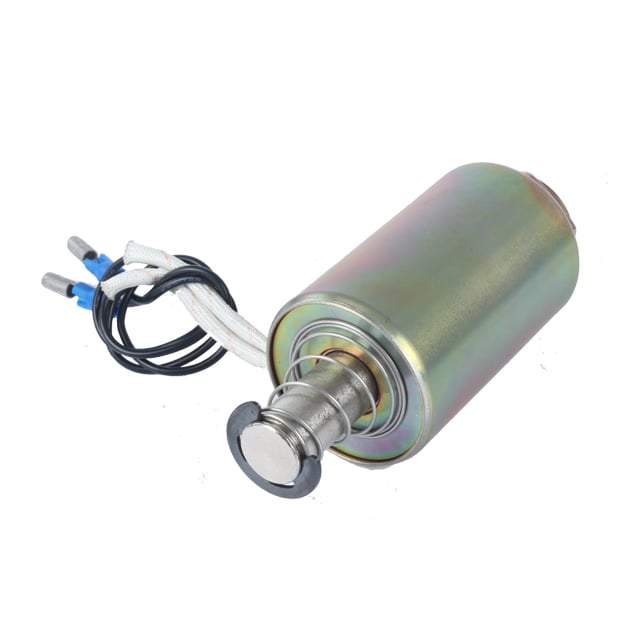
A push pull solenoid is an electromagnetic actuator widely used across industrial sectors to convert electrical energy into precise linear motion. Understanding the typical industrial uses of push pull solenoid technology helps engineers and procurement professionals select the right actuation solution for their specific applications. These compact devices deliver reliable, repeatable mechanical action in environments ranging from factory automation to medical equipment, making the push pull solenoid an essential component in modern industrial systems.
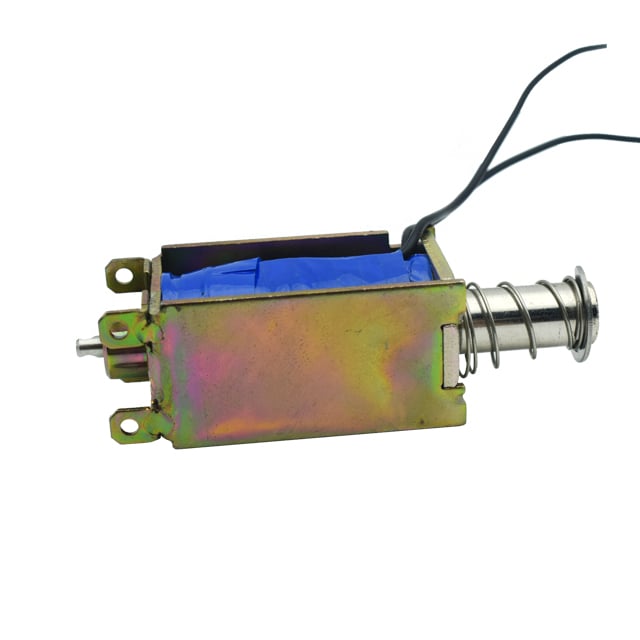
The versatility of the push pull solenoid stems from its ability to perform both pushing and pulling actions depending on electrical polarity and mechanical configuration. Industrial applications demand actuators that offer fast response times, consistent force output, and long service life. The push pull solenoid meets these requirements while maintaining a compact form factor that fits into space-constrained assemblies. From simple locking mechanisms to complex automated sorting systems, the push pull solenoid serves as a fundamental building block in industrial design, enabling manufacturers to achieve precise control over mechanical processes with minimal energy consumption and maintenance requirements.
In automated assembly environments, the push pull solenoid functions as a critical actuation component for part positioning, feeding, and securing operations. Manufacturing lines rely on the push pull solenoid to move components into precise alignment before welding, fastening, or bonding processes occur. The rapid actuation speed of the push pull solenoid allows production systems to maintain high throughput rates while ensuring positional accuracy. Assembly robots integrate the push pull solenoid into gripper mechanisms and tool changers, where the actuator's bidirectional motion capability enables both part pickup and release functions within a single compact device.
The push pull solenoid also serves essential roles in quality control stations along production lines. Inspection systems use the push pull solenoid to position sensors, activate measurement probes, and trigger rejection mechanisms when defective parts are detected. The consistent force output of the push pull solenoid ensures that quality control procedures remain standardized across millions of production cycles. Manufacturers select the push pull solenoid for these applications because the device offers predictable performance characteristics that can be precisely calibrated to match specific assembly requirements, reducing setup time and minimizing production errors.
Material handling systems incorporate the push pull solenoid into diverter gates, pusher mechanisms, and sorting arrays that direct products along different conveyor paths. The push pull solenoid responds to control signals from vision systems or barcode scanners, extending or retracting to route items based on size, weight, or destination codes. Warehouses and distribution centers depend on the push pull solenoid to maintain efficient sorting operations, where the actuator's fast cycling capability supports high-volume throughput demands. The push pull solenoid withstands continuous operation in these environments, cycling thousands of times per hour without significant performance degradation.
Packaging operations utilize the push pull solenoid in carton forming, flap folding, and label application equipment. The actuator's precise stroke length control ensures that packaging materials are positioned correctly before sealing or printing processes begin. The push pull solenoid contributes to packaging system reliability by delivering consistent mechanical action across varying ambient temperatures and duty cycles. Industrial engineers specify the push pull solenoid for material handling applications because the device combines mechanical simplicity with electronic control integration, allowing seamless coordination with programmable logic controllers and supervisory control systems.
The push pull solenoid serves as the primary actuation mechanism in industrial valve assemblies that control the flow of liquids, gases, and steam in processing systems. Chemical plants, refineries, and water treatment facilities install the push pull solenoid in valve actuators where remote operation and rapid shutoff capability are essential safety features. The push pull solenoid operates valve stems that open or close fluid passages in response to process control signals, enabling automated regulation of flow rates, pressure levels, and temperature conditions. The electromagnetic design of the push pull solenoid ensures that valve position remains stable even during power interruptions, as spring return mechanisms can be integrated to fail in either open or closed positions depending on process safety requirements.
Pneumatic and hydraulic systems incorporate the push pull solenoid into pilot valve assemblies that control larger actuators and cylinders. The push pull solenoid directs compressed air or hydraulic fluid to different ports within control valves, translating small electrical control signals into powerful mechanical movements. Manufacturing equipment uses the push pull solenoid in valve manifolds where multiple fluid circuits must be coordinated to achieve complex motion sequences. The compact size of the push pull solenoid allows valve designers to create integrated control blocks that minimize piping connections and reduce potential leak points in fluid power systems.
Precision dispensing systems rely on the push pull solenoid to control the release of adhesives, lubricants, coatings, and other process fluids in measured quantities. The push pull solenoid actuates pinch valves, needle valves, and diaphragm valves that meter fluid delivery with millisecond timing accuracy. Pharmaceutical manufacturing, food processing, and electronics assembly operations specify the push pull solenoid for dispensing applications where product quality depends on consistent application volumes. The push pull solenoid enables dispensing equipment to achieve repeatable shot sizes across millions of dispense cycles, maintaining process capability indices that meet stringent quality standards.
Chemical dosing systems in water treatment plants use the push pull solenoid to inject precise amounts of treatment chemicals into process streams. The actuator controls metering pumps and injection valves that add chlorine, pH adjusters, and flocculants at rates synchronized with flow sensors and chemical analyzers. The push pull solenoid withstands exposure to harsh chemical environments when properly sealed and constructed from corrosion-resistant materials. Industrial water systems depend on the push pull solenoid to maintain automated chemical feed programs that optimize treatment efficiency while minimizing chemical waste and operating costs.
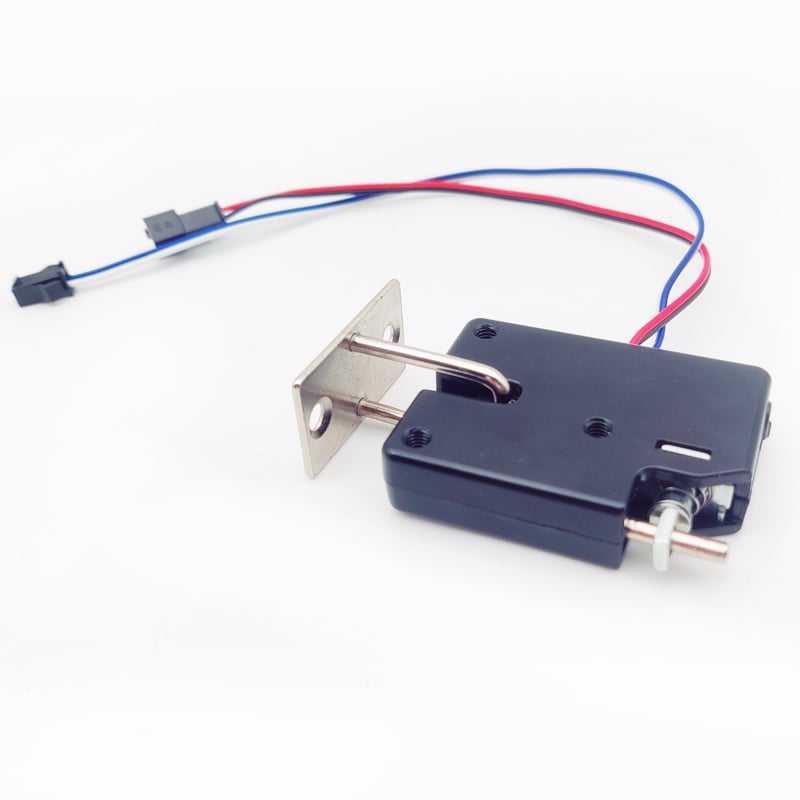
Security systems integrate the push pull solenoid into electronic locking mechanisms that control access to restricted areas in industrial facilities. The push pull solenoid retracts locking bolts or releases latch mechanisms when valid credentials are presented to card readers or biometric scanners. The actuator's fail-secure or fail-safe operating modes can be configured based on facility security policies and fire code requirements. The push pull solenoid provides reliable locking force that resists unauthorized entry attempts while allowing rapid egress during emergency situations. Industrial facilities specify the push pull solenoid for access control because the device operates on standard low-voltage power supplies that integrate easily with building automation systems and alarm networks.
Machinery safety systems employ the push pull solenoid in guard interlock switches that prevent equipment operation when protective covers are open or safety barriers are bypassed. The push pull solenoid engages locking pins that physically prevent guard doors from opening while hazardous machine motion is active, ensuring compliance with industrial safety standards. The actuator's positive engagement mechanism provides verification that guards are properly secured before control systems permit machine startup sequences. The push pull solenoid contributes to workplace safety by creating mechanical barriers that supplement electronic safety logic, adding redundant protection layers in high-risk industrial environments.
Vending machines and automated retail equipment use the push pull solenoid to release products after payment validation and selection input. The actuator controls product release mechanisms, coin return gates, and dispenser locks that must operate reliably under continuous public use conditions. The push pull solenoid cycles millions of times over the service life of vending equipment, maintaining consistent performance despite varying ambient conditions and product loads. Vending system designers select the push pull solenoid for its compact size, low power consumption, and ability to generate sufficient force to overcome mechanical friction in product delivery mechanisms.
Coin-operated laundry equipment, parking meters, and self-service kiosks incorporate the push pull solenoid into payment validation systems and service enabling mechanisms. The actuator unlocks equipment functions after payment processing confirms transaction completion, then re-engages locks after service cycles finish. The push pull solenoid interfaces with electronic payment systems and mechanical timers to coordinate equipment access with payment intervals. Industrial-grade push pull solenoid designs ensure long service intervals in these applications, reducing maintenance costs and equipment downtime in revenue-generating operations.
Medical diagnostic instruments integrate the push pull solenoid into sample handling systems, fluid path switching mechanisms, and analytical probe positioning assemblies. Blood analyzers use the push pull solenoid to move sample tubes through testing stations, where the actuator's precise motion control ensures accurate specimen alignment with optical sensors and reagent dispensers. The push pull solenoid operates in cleanroom environments where contamination control and sterilization compatibility are critical requirements. Laboratory automation systems specify the push pull solenoid for its ability to deliver repeatable motion profiles that maintain calibration accuracy across thousands of test cycles.
DNA sequencing equipment and chromatography systems employ the push pull solenoid in valve arrays that control complex fluid routing patterns during analytical procedures. The actuator switches sample flows between different detector columns, waste streams, and collection vessels with precise timing coordination. The push pull solenoid enables laboratory instruments to perform multi-step analytical protocols automatically, reducing operator intervention and improving test consistency. Medical device manufacturers select the push pull solenoid for diagnostic applications because the device meets regulatory requirements for electrical safety, electromagnetic compatibility, and materials biocompatibility.
Therapeutic equipment incorporates the push pull solenoid into drug delivery systems, patient positioning mechanisms, and surgical instrument actuators. Infusion pumps use the push pull solenoid to control valve timing that regulates medication flow rates, ensuring accurate dosing according to programmed treatment protocols. The actuator's reliable operation supports patient safety by maintaining consistent pump performance during extended therapy sessions. The push pull solenoid operates quietly in patient care environments, minimizing audible disturbances during treatment delivery. Medical device engineers specify the push pull solenoid for therapeutic applications where device reliability directly impacts patient outcomes and treatment efficacy.
Surgical instruments integrate the push pull solenoid into powered cutting tools, stapling devices, and tissue manipulation equipment that require precise actuator control during procedures. The push pull solenoid responds to surgeon input commands with minimal latency, translating control signals into immediate mechanical action. The actuator's compact form factor allows surgical instrument designers to create ergonomic handheld tools that maintain fine motor control during delicate procedures. The push pull solenoid withstands sterilization cycles and repeated use in demanding surgical environments, meeting stringent reliability standards required for implantable and life-sustaining medical devices.
The service life of a push pull solenoid in industrial applications typically ranges from one million to ten million cycles depending on operating conditions, duty cycle, and load characteristics. Continuous-duty push pull solenoid designs with proper heat dissipation can operate for years in automated systems, while intermittent-duty push pull solenoid units excel in applications with lower cycling frequencies. Factors affecting push pull solenoid longevity include ambient temperature, mounting orientation, electrical supply stability, and mechanical load alignment. Regular maintenance of associated mechanisms and electrical connections extends push pull solenoid service life in industrial environments.
Engineers select push pull solenoid force ratings by calculating the total load that the actuator must overcome, including friction forces, spring resistance, and inertial loads from moving components. The push pull solenoid force specification should include a safety margin above the calculated load to ensure reliable operation across the device's full stroke length, as electromagnetic force typically decreases as the plunger extends. Testing prototype installations with candidate push pull solenoid models verifies that force output remains adequate under worst-case environmental conditions including temperature extremes and voltage variations. Application-specific factors such as response time requirements and duty cycle limitations also influence push pull solenoid force selection decisions.
Push pull solenoid devices can operate in hazardous industrial environments when properly specified with explosion-proof enclosures, intrinsic safety barriers, or purged housings that meet applicable electrical code requirements for classified locations. Specialized push pull solenoid designs incorporate sealing methods that prevent flammable gas ingress and limit surface temperatures below ignition thresholds. Facilities processing combustible materials or operating in potentially explosive atmospheres specify push pull solenoid models certified for their specific hazard classifications. Installation practices for push pull solenoid devices in hazardous areas must follow electrical code provisions regarding wiring methods, grounding requirements, and equipment spacing to maintain safe operating conditions.
 Hot News
2026-08-24
2026-08-17
2026-08-17
2026-08-10
2026-08-03
2026-07-30
Zhongshan Landa Technology: ISO9001 & UL-certified manufacturer of custom electromagnets, push-pull solenoids, and induction coils for automation, medical, auto & appliances. Trusted global partner since 2008.
3F, Building 4, No.8 North Industrial Avenue Xiaolan, Xiaolan Town, Zhongshan, Guangdong, China
Copyright © Zhongshan Landa Technology Co., Ltd All Rights Reserved Privacy Policy

 EN
EN